

When I was around seventeen, I heard the Robert Fripp String Quintet for the first time, and I immediately decided that I had to learn that technique, that background, that whole world, at any cost.
The only possible way was to go directly to the source, and that is how I had my first “initiation” into Guitar Craft: a series of lessons with Bert Lams, suggested by Robert himself, since at that particular moment there were no courses available.
From that point on, I moved into the world of plectrum guitar, and for the next twenty years it became, almost completely, my only playing technique.
Over the years, probably because of my natural inclination toward experimentation and doing things a little differently from everybody else, I have tried an unreasonable number of picks outside what I considered the “golden standard”: the equilateral Ebonite Guitar Craft pick.
So this is a little story of that research, which, of course, is still not over.
The Holy Grail
I belong to what I would call the “second generation” of Crafties: the people who arrived after the historic League of Crafty Guitarists records, and probably during a slightly calmer period, at least in terms of Robert’s direct involvement and the most significant live activity.
By that time, the stock of the famous GC Ebonite picks had already been gone for many years. The classic Herdim pick was considered the Holy Grail of picks, and the lucky few who still owned one, especially if it was intact or in good condition, guarded it carefully and used it only in exceptional circumstances.
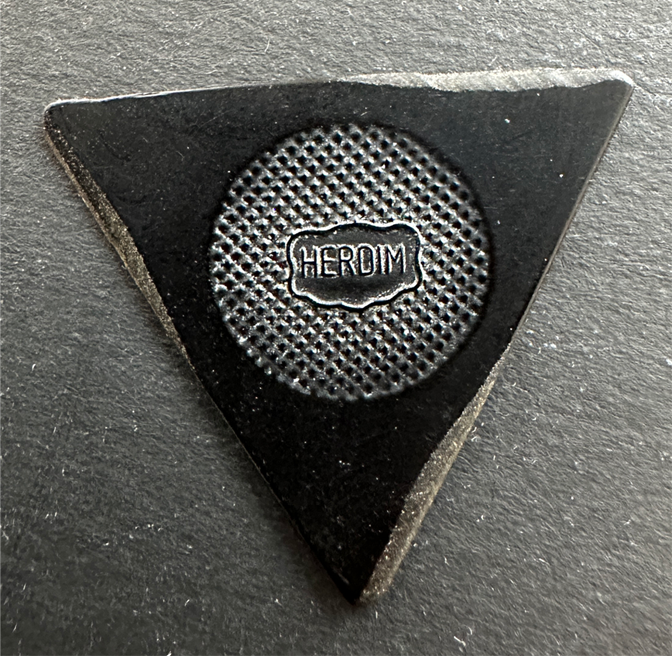
My first GC pick was given to me by Bert Lams in 1998, and it was already the model that had replaced the original Herdim: the “Steve Ball Pick” or the “Ninja Pick”… at least that is what we called it at the time.
I don’t have them anymore, but they were all black, very thin and with no engraving.
They were very similar to this (later) prototype (from Redbear?), maybe less polished.
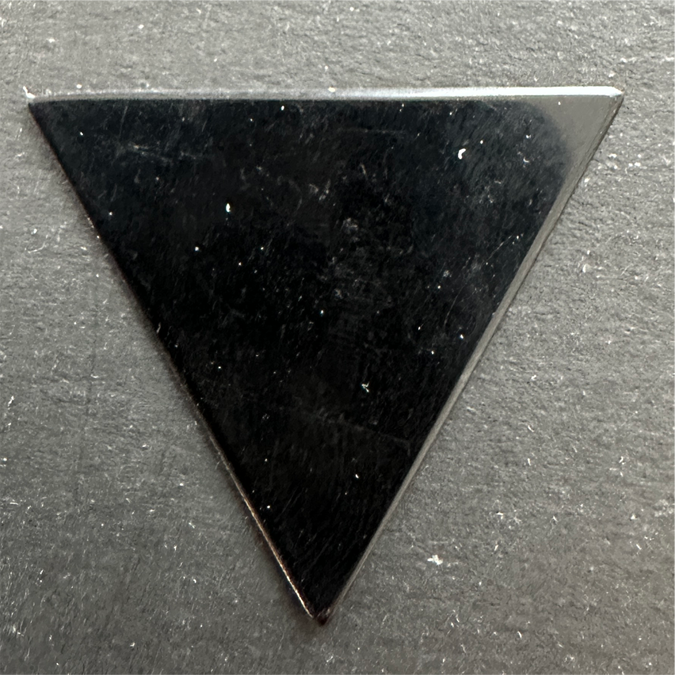
There is still a very detailed account of Steve’s research here:
https://www.steveball.com/words/history/PickHistory/index.htm
Of course, in a time when the internet was still in its early days, all sorts of completely uncontrolled rumours circulated during Guitar Craft courses about these picks, why they were disappearing, and why they were no longer being produced.
One explanation was that they broke too easily, and it was indeed quite common to see pieces of pick flying away during particularly energetic performances of THRAK.
(I witnessed that too).
Another explanation, which already belongs to the territory of urban legend, was that these picks were made from the same material as ping-pong balls, and that during production they released toxic gases, which eventually caused the whole thing to be stopped.
I always forgot to ask Steve whether there was ever any truth in this story, but I suspect we may know soon.
The “Spirit of Initiative” period
When the Ninja Pick (named like that because they were allegedly lethal if thrown with sufficient accuracy…) supply also started to run out, we entered a period of complete anarchy: everybody did what they could.
I did the same, obviously.
What follows is a very incomplete list, of the various models that passed through my hands over the years.
I was tempted to give each of them a rating, but I don’t think that would be fair.
We have to remember that, in that very specific historical moment, even a pick I would not even consider using today may have been what made it possible to carry on a certain kind of work at the time.
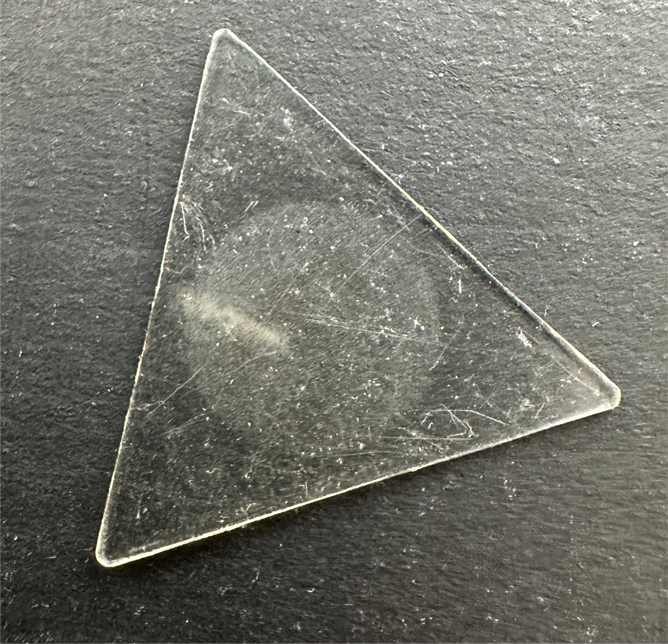
Transparent plastic
One day I found some large transparent picks in one of the biggest music stores in Milan. For some reason, the shop had decided to give them away for free, probably just to get rid of them. I took advantage of the situation, and with the help of a few friends I collected at least 30 of them over the following weeks. Then I cut them into the shape and size of the GC picks.
These were quite thin, so I think they worked better on electric guitar. I gave a small bag of them to Hernán Nuñez, but I don’t think they were ever particularly successful in Europe. I don’t remember seeing them in the hands of many other Crafties, and I have no idea what happened to them afterwards.
Years later, during my first course in the US, I saw a few Crafties using them, praising their feel and sound!
Of course, by then I had none left…. Anyway, I don’t think they were that good.
The Washburn Pick
There was also an attempt at a larger-scale production by Patrick Schuleit of Washburn Guitars, but apparently the prototypes were not particularly successful.
I didn’t like it either and I never used them. I don’t remember them becoming part of the shared mythology. Which, in Guitar Craft terms, usually means they disappeared quite quickly.
Transparent yellow
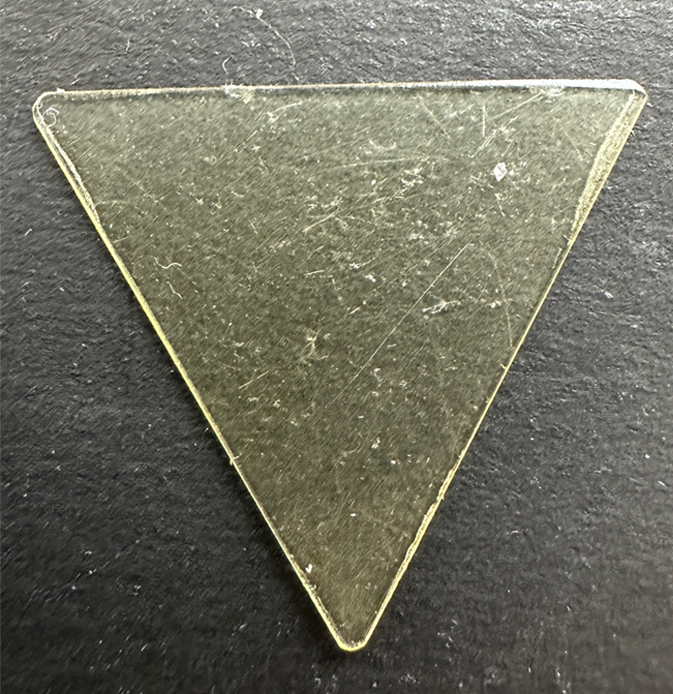
Another type of pick was made in the US with what, according to another possible urban legend, was supposed to be “aerospace plastic”.
At least that is what someone told me, although I no longer remember who.
These were much more popular. They had a yellowish, semi-transparent color.
They were quite similar to Steve’s picks, with the advantage of being much, much more resistant.
Unknown material pick
Another pick I came across was one that, if I remember correctly, was being sold in Argentina and Europe. It was terrible, but again, it had at least the merit of keeping the wheel spinning. it was made by a kind of rubbery plastic.
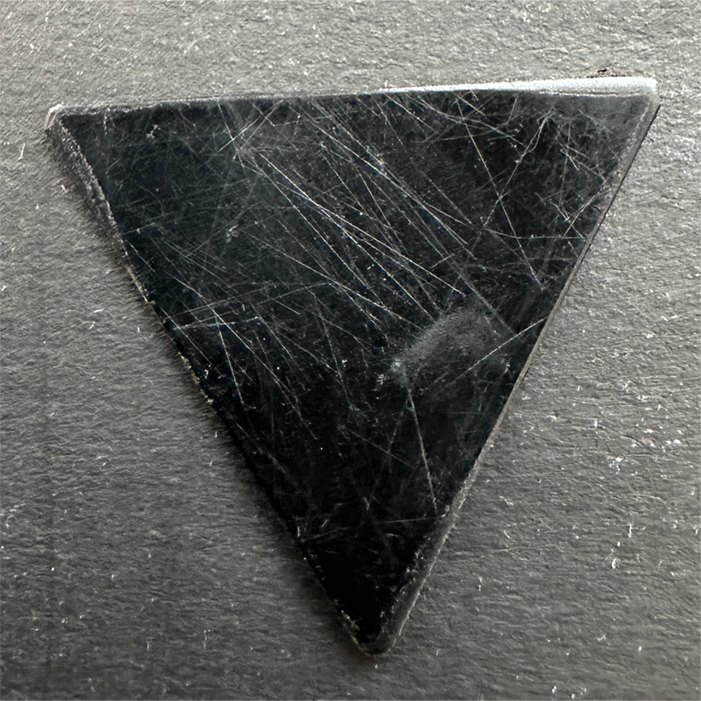
My picks at that time
For many years I used a combination of Steve Ball picks, very few original Herdim (which I used to record my first solo album, Resonances).
Around that time, I was also probably using a few triangular mandolin picks, some new, some vintage
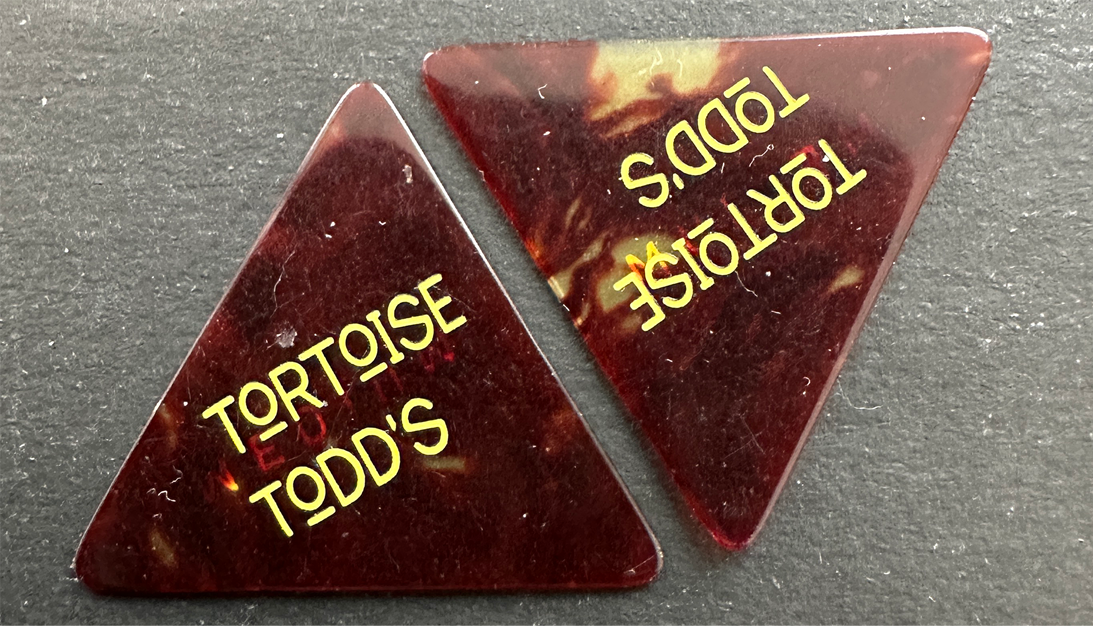
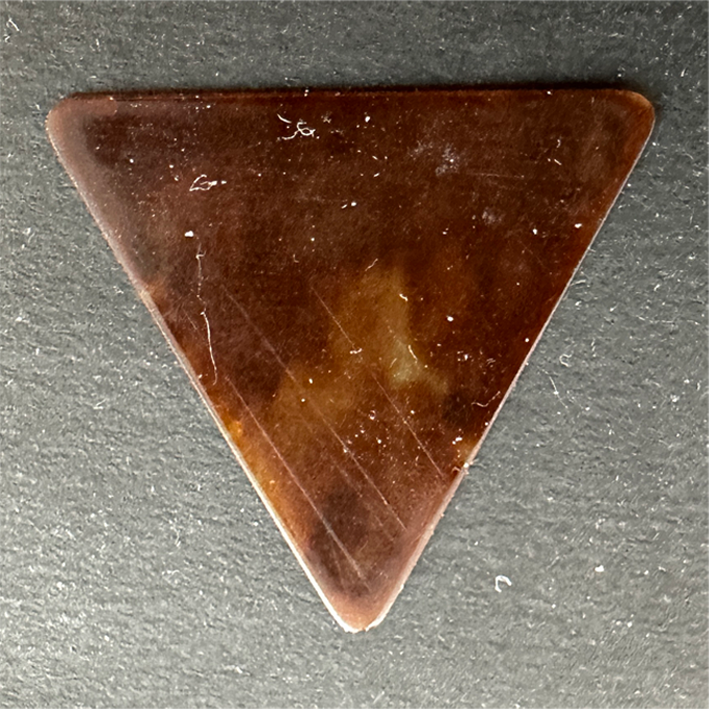
When I lived in Spain for a few months, I used to look for old little music shops where I could buy triangular bandurria picks. I had a very nice one, probably an old tortoise shell pick, although it was a little too big. One day it broke in my pocket on the train back from university.
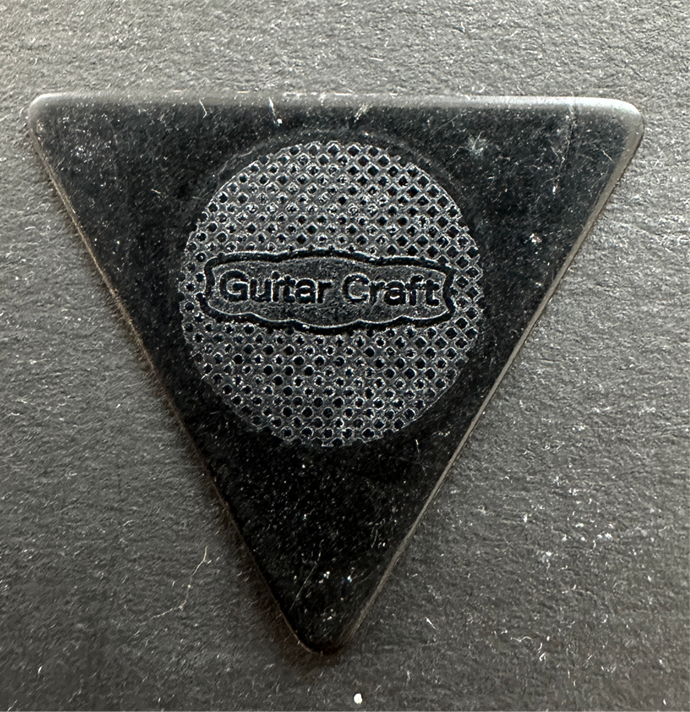
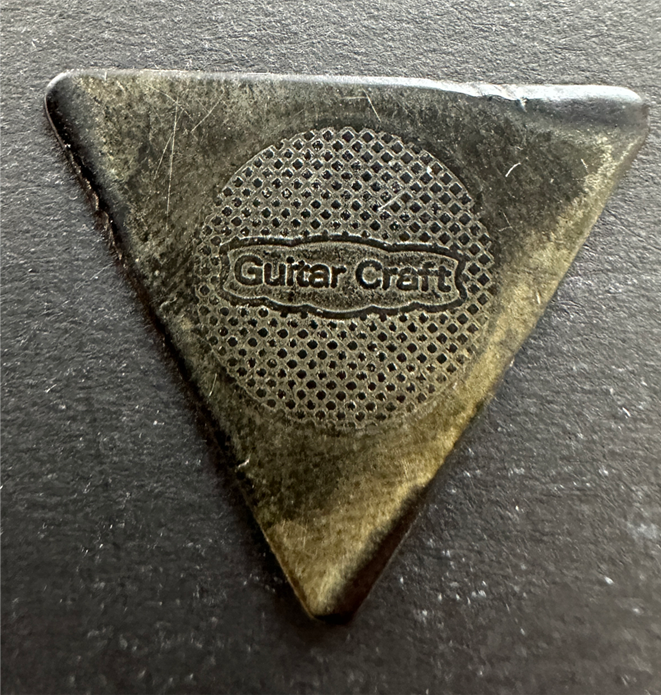
I also used these GC picks, but I have to admit I can’t quite place them in the chronology of all this pick archaeology. I’m quite sure they were more recent.
Red Bear
In 2009, I wrote to Dave Skowron to ask if he could make me a GC-shaped pick.
Red Bear picks are made from Galalith, a natural material produced by hardening casein. It has a very organic feel and is often used as an alternative to tortoise shell, both in tone and touch. Dave was very enthusiastic about the idea, and he agreed to custom-make one for me and one for Bert for the same price as his standard models. For many years he even kept that model available on his website, although I just checked and it does not seem to be there anymore.
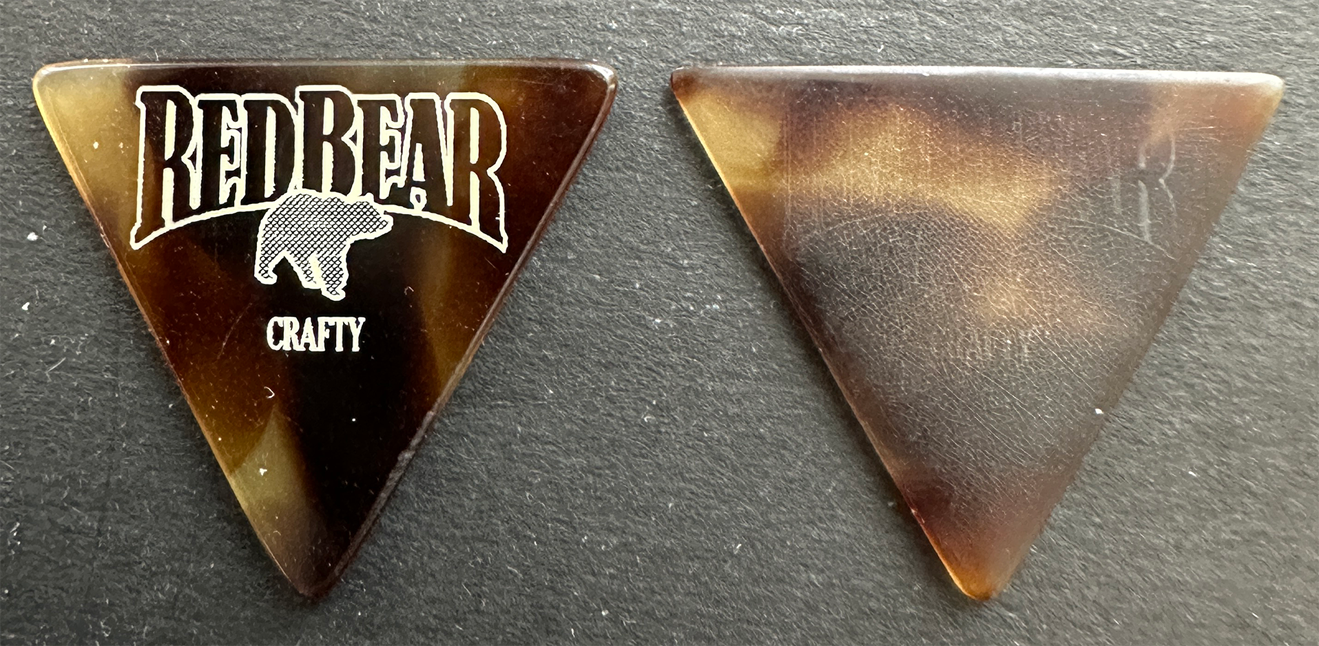
He also sent me another one made of a different material as a test.
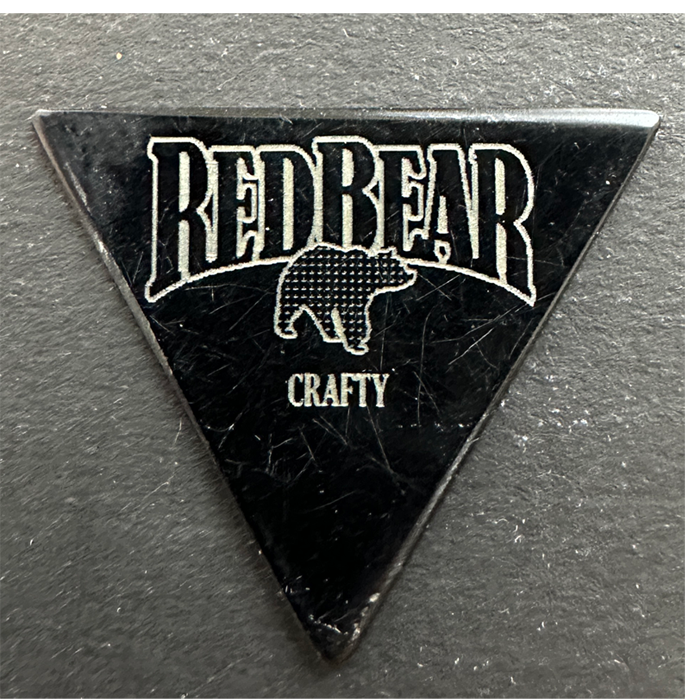
This was my first real experience with a premium-quality pick.
Bert and I recorded our first album, Long Ago, with those Red Bear picks.
It is a very good pick, but it wears down very quickly and warps too easily.
Iketani Picks
Then, almost out of nowhere, Hiroshi Iketani saved the entire Guitar Craft community with what I still consider one of the best GC pick ever made.
Some of them, in my opinion, are even much better than the original Herdim.
In GC circles it is simply known as the “Iketani Pick”. It is made in Ebonite, a vulcanized rubber, has a grip surface, and even carries the GC logo.
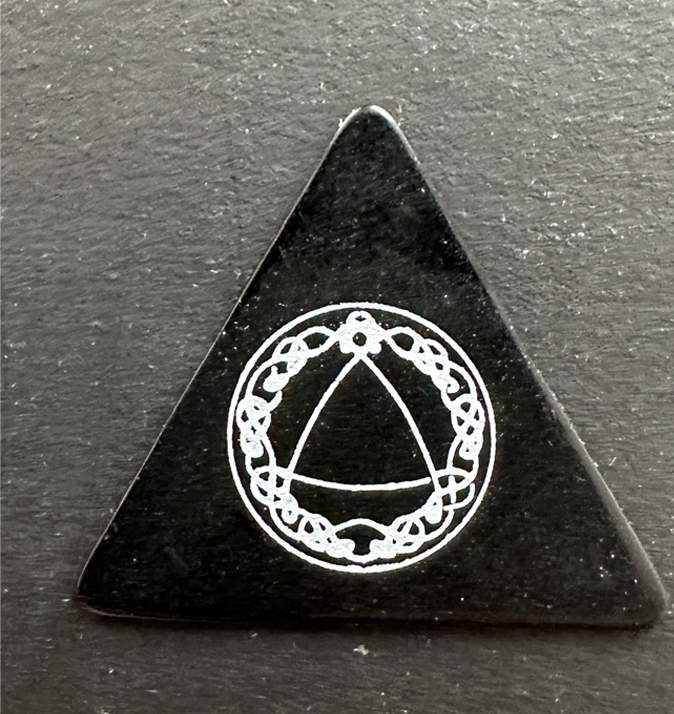
I am lucky enough to still have a small stash of them, and this is what I use almost exclusively on electric guitar. He also made some custom ones for California Guitar Trio with their logo instead of GC’s one.
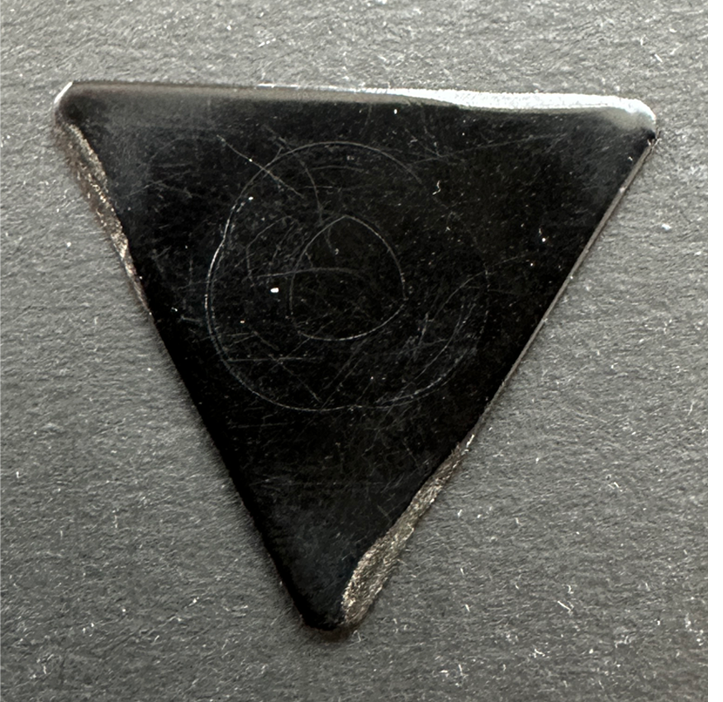
I also had the great opportunity to have some custom picks made to my own specifications. The best ones ever were a pair of 0.95 mm Ebonite GC picks, which sound absolutely amazing. Unfortunately, Hiroshi told me he could not make them anymore, because producing that thickness almost destroyed his machine.
I gifted one of them to Steve Ball, as a thank you for all the research he had done during the earlier years. His past efforts helped a lot of Crafties, myself included.
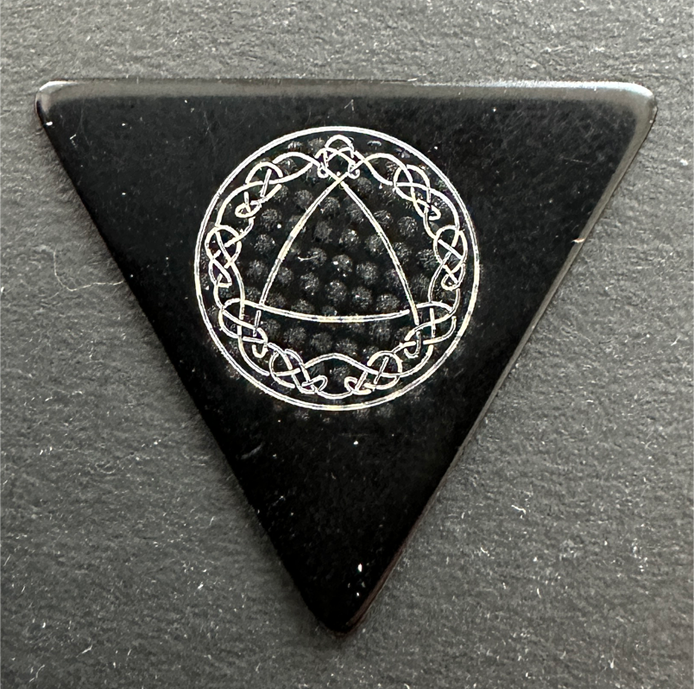

One additional note: Iketani picks were made both in Ebonite and Delrin.
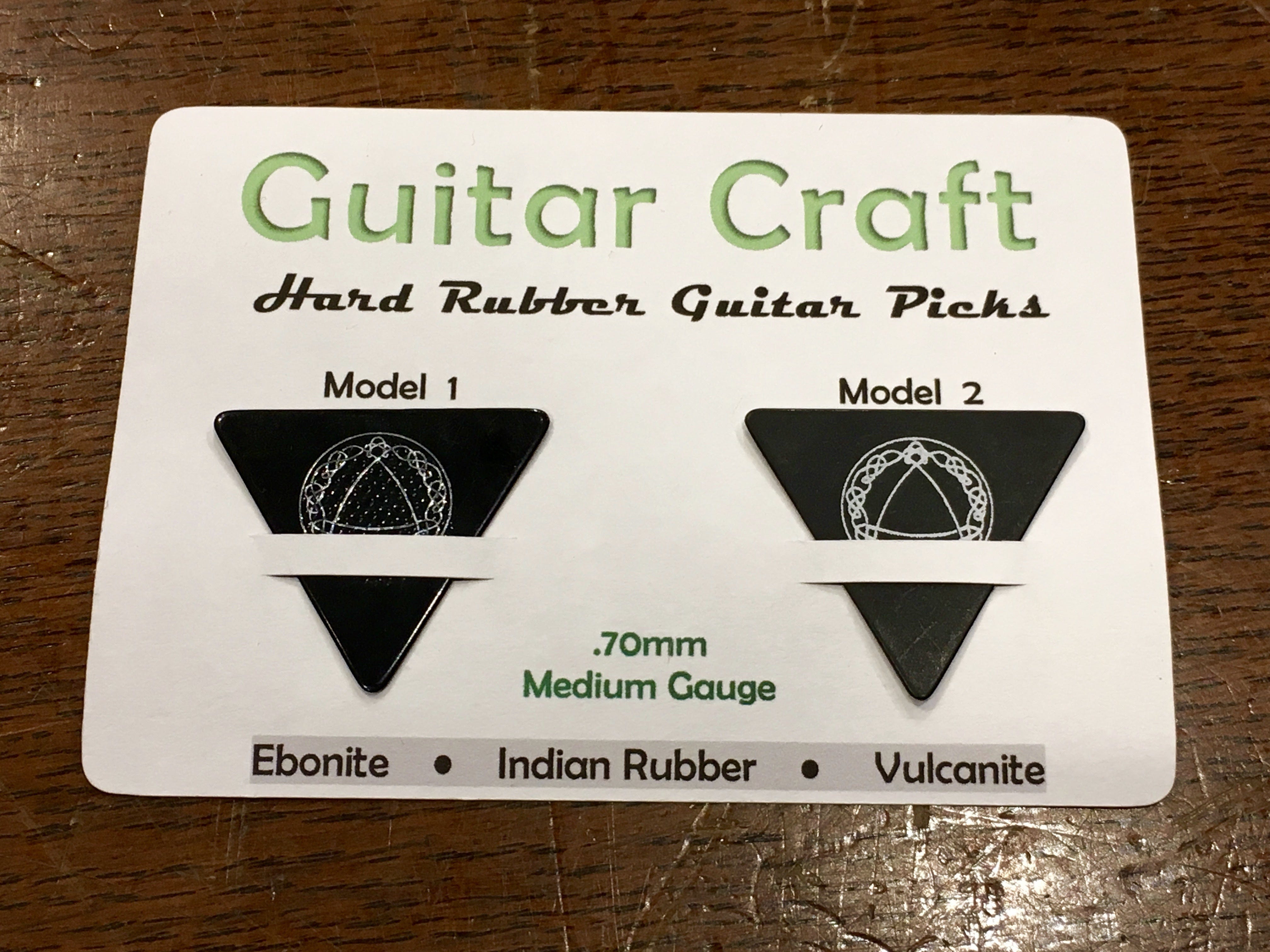
It seems that the Delrin ones were sold in larger quantities during GC courses in Europe. The difference was quite obvious to the eye, the touch, and the sound.
Unfortunately, Iketani picks are no longer available.
So here we are again: a time when Crafties will take the initiative and start looking for new solutions. And I have a feeling that, very soon, we’ll begin to see new kinds of GC-style plectra.
In the next article I will talk about my own personal research into picks, what I use today, and why.
The one’s embossed “GuitarCraft” are early Iketani picks. I still have some myself. The yellow on that odd one is likely from the sulphur that is in ebonite—if I sand an ebonite pick to a thinner thickness, i get such a visual effect. (The amount of sulphur in ebonite can vary with manufacture)
I like ebonite a lot as well as galalith, though I’m still working to see if I can find a material that plays even better without sacrificing feel (e.g. ebonite transfers heat better than Delrin so an ebonite plectrum feels warmer in the fingers than a Delrin). There’s a lot to consider, but out of necessity I’ve got a ‘feel index’ that equally weights five different aspects (in subjective reality, some of these aspects may be more important than others), such as the time for ring-down (how long it takes the pick to stop vibrating after a stroke).
Thank you! I found one in Colombia, I'm trying to figure out how to get it shipped to Ecuador 🙃